

When your bank, shopping mall, or currency exchange business handles multiple currencies, manual transactions can create queues, increase staff workloads, and complicate cash management. Choosing a reliable currency exchange kiosk supplier helps you automate cash dispensing, coin processing, and foreign exchange services while improving transaction efficiency. However, not every self-service terminal supports high-volume cash handling, multiple languages, or the security features your operation requires.
Shenzhen Xingtongda Information Technology Co., Ltd. (XTD) develops self-service terminals and intelligent equipment solutions, including OEM/ODM products for different industries. Its multi-currency POS terminal combines four banknote cassettes, high-speed dispensing, coin sorting, and a touchscreen interface. If you are sourcing equipment for a financial institution, exchange counter, or retail location, understanding these specifications can help you determine whether this kiosk fits your operational requirements.
What Should You Expect from a Currency Exchange Kiosk Supplier?
A qualified supplier should offer more than a terminal enclosure. You need equipment that supports your transaction workflow, handles cash securely, and fits your installation environment.
When evaluating a currency exchange kiosk manufacturer, consider these essential features:
- Multi-currency handling: Automated foreign exchange functions for businesses serving customers with different currencies.
- High-capacity cash dispensing: Multiple cassettes help accommodate larger banknote inventories.
- Coin processing: Automated coin acceptance and sorting support mixed-denomination transactions.
- Transaction security: Secure cash storage, unauthorized-opening alarms, and camera monitoring help protect cash-handling operations.
- Multilingual operation: Multiple interface languages help serve international customers.
- System integration: Compatibility with your financial or retail management system should be confirmed before ordering.
XTD designs and supplies self-service equipment for sectors including finance, government, healthcare, transportation, and telecommunications. Its OEM/ODM services also provide a starting point for buyers who need to discuss customized terminal configurations.
Multi-Currency Exchange Kiosk Specifications and Benefits
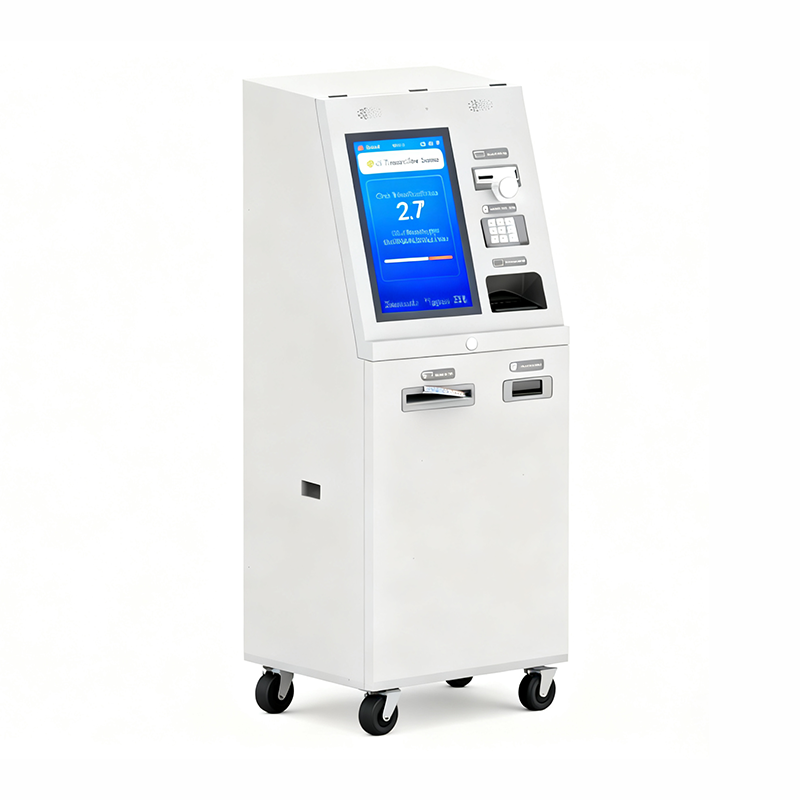
The XTD self-service foreign exchange payment kiosk combines cash dispensing, coin processing, and a touchscreen interface in an indoor terminal.
| Feature | Product specification | Operational benefit |
|---|---|---|
| Banknote capacity | 4 cassettes × 1,000 notes | Stores up to 4,000 banknotes across four cassettes |
| Cash dispensing speed | Up to 5 notes per second | Supports faster cash dispensing |
| Coin acceptance speed | Up to 600 coins per minute | Helps process high volumes of coins |
| Coin holder capacity | Approximately 12,000 coins | Accommodates substantial coin volumes |
| Coin sorting module | 400–700 pcs | Supports coin sorting operations; exact configuration should be confirmed |
| Touchscreen | 21.5-inch LCD | Provides a large interactive interface |
| Display resolution | 1920 × 1080 | Supports clear transaction instructions |
| Security | 5 mm safe box and illegal-opening alarm | Adds physical cash protection |
| Camera | 2-megapixel camera | Supports visual monitoring |
| Power supply | AC 110–240 V, 50/60 Hz | Supports compatible electrical environments |
| Languages | English, Chinese, Thai, German, Japanese, Korean, French, Spanish | Accommodates multilingual interfaces |
These figures describe the listed hardware specifications, not guaranteed transaction throughput under every operating condition. Actual performance depends on the currency configuration, software, transaction workflow, and connected systems.
Before purchasing, confirm which currencies, denominations, banknote validation methods, coin standards, and exchange-rate mechanisms the supplier supports. Also verify whether your required payment methods and local financial regulations are compatible with the proposed configuration.
Where Can a Self-Service Currency Exchange Machine Be Used?
Different locations place different demands on cash-handling equipment. Matching the terminal to your operating environment helps you avoid unnecessary features or missing capabilities.
Banks and Foreign Exchange Centers
Banks and exchange businesses can use self-service terminals to support cash deposits, withdrawals, exchange transactions, and other configured services. High-capacity cassettes and secure cash storage are relevant when staff handle substantial cash volumes.
Shopping Malls and Retail Locations
Malls and retail facilities can consider these kiosks for self-service payment or change-related services. Coin acceptance and multilingual instructions may help simplify transactions, provided the installed software supports the intended workflow.
Airports and International Service Hubs
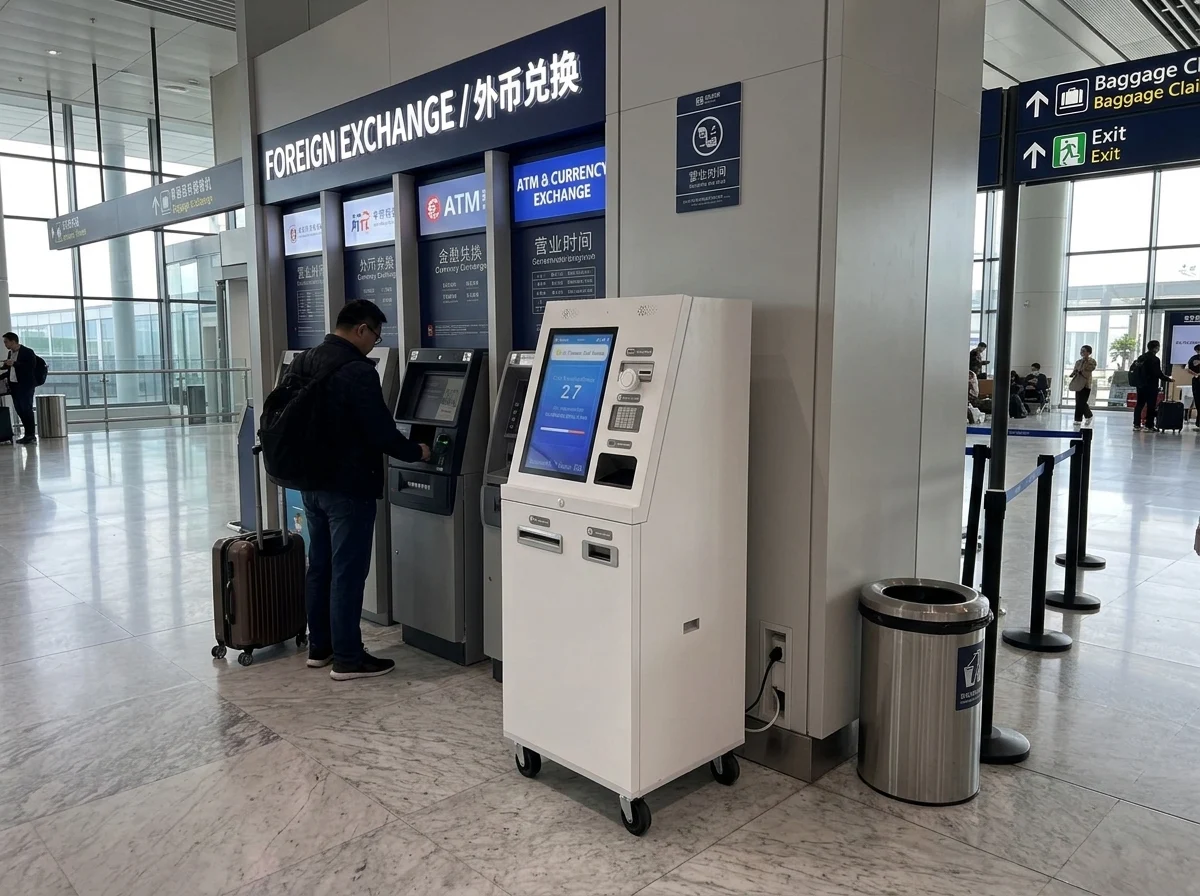
Airports serve travelers who speak different languages and may need foreign currency services. A multilingual touchscreen and automated cash handling can support this environment, subject to local licensing, currency availability, and exchange-service integration.
Government and Public Service Halls
Public service facilities may use self-service terminals for configured payment and cash-handling tasks. Buyers should verify that the selected application complies with the facility’s security, accessibility, and financial requirements.
Currency Exchange Kiosk vs. Traditional Cash Handling
The right solution depends on your transaction volume, staffing model, and technical requirements.
| Evaluation factor | Self-service currency exchange kiosk | Traditional staff-operated service |
|---|---|---|
| Customer interaction | Supports configured self-service workflows | Staff assist with each transaction |
| Cash processing | Can automate supported dispensing and coin operations | Depends on staff and available equipment |
| Operating workflow | Requires software, maintenance, and cash replenishment | Requires staffing and manual procedures |
| Security management | May include alarms, a secure safe, and camera monitoring | Depends on counter controls and security equipment |
| Customization | OEM/ODM options may support specific requirements | Changes depend on counter systems and processes |
| Initial investment | Includes equipment, integration, and deployment costs | Includes counter setup, staffing, and relevant equipment |
A kiosk does not eliminate every staffing requirement. You may still need personnel for cash replenishment, exception handling, maintenance, reconciliation, and regulatory compliance.
How to Choose the Right Currency Exchange Kiosk Supplier
Follow these steps before requesting a quotation or placing an order.
- Define your transaction requirements. List the currencies, banknote denominations, coin types, daily transaction volumes, and services you plan to offer.
- Check the hardware configuration. Compare cassette capacity, dispensing speed, coin acceptance, touchscreen size, and security features against your actual workload.
- Confirm software and payment integration. Ask whether the kiosk supports your exchange-rate engine, transaction management software, receipt requirements, and existing financial systems.
- Review customization and manufacturing capabilities. Discuss OEM/ODM options, enclosure requirements, interface languages, production schedules, and quality inspection procedures with the supplier.
- Verify compliance and after-sales support. Request applicable certificates, technical documentation, warranty terms, spare-parts information, and maintenance arrangements for your destination market.
XTD reports that its production facilities include sheet-metal fabrication equipment, such as laser-cutting machines, CNC bending machines, riveting machines, and welding equipment. Its team also includes R&D, production, technical, sales, and after-sales departments. Ask XTD to provide supporting documentation and confirm which capabilities and services apply to your specific order.
Frequently Asked Questions
1. What should you check before choosing a currency exchange kiosk supplier?
Check supported currencies, banknote and coin handling, security features, software integration, customization options, applicable certifications, warranty coverage, and technical support. Request written confirmation of any essential functionality.
2. Can a self-service currency exchange kiosk handle both banknotes and coins?
The XTD model described here supports banknote dispensing, mixed-denomination cash deposits, coin acceptance, and coin sorting. Confirm the exact supported denominations and transaction workflows before ordering.
3. Does XTD provide OEM/ODM currency exchange kiosks?
XTD identifies itself as an OEM/ODM manufacturer and service provider for self-service terminals and intelligent equipment. Contact the company to discuss customization scope, minimum order requirements, delivery schedules, and market-specific compliance documentation.
Conclusion
Choosing the right currency exchange kiosk supplier means balancing cash-handling capacity, transaction security, software compatibility, and long-term service requirements. XTD’s multi-currency self-service terminal offers four banknote cassettes, dispensing speeds of up to 5 notes per second, coin acceptance of up to 600 coins per minute, and a 21.5-inch touchscreen. These specifications provide a useful starting point for evaluating equipment for banks, foreign exchange centers, shopping malls, and other indoor service locations.
Request a Currency Exchange Kiosk Solution from XTD
Planning a self-service currency exchange project? Contact Shenzhen Xingtongda Information Technology Co., Ltd. to discuss your target market, required currencies, transaction volume, and OEM/ODM customization needs.
Share your application requirements and ask for a proposed configuration, technical documentation, quotation, and confirmation of applicable compliance requirements before moving forward.
