

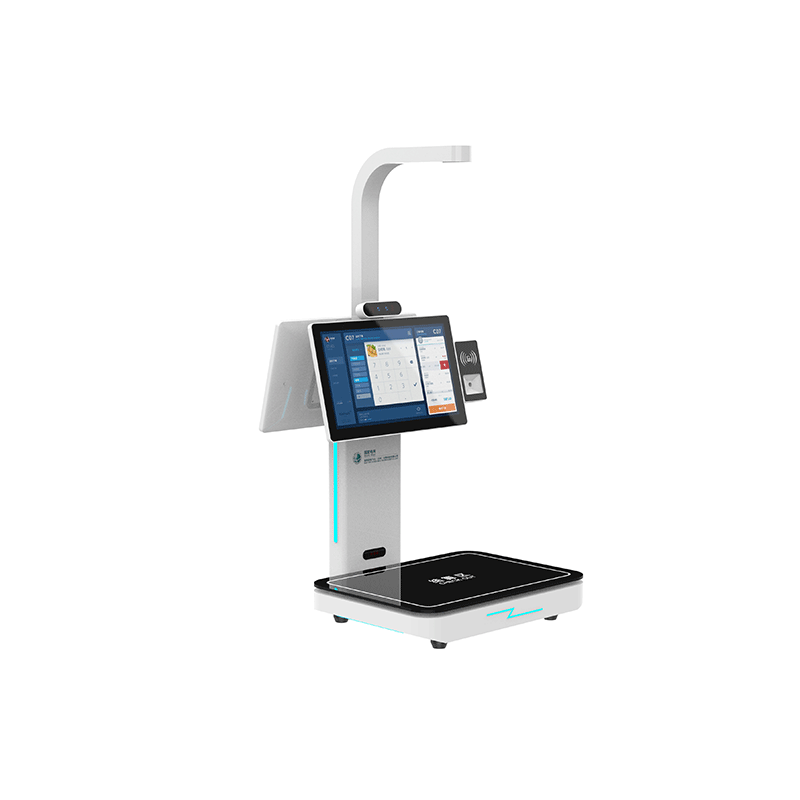
When customers buy fresh produce, bulk foods, or other items sold by weight, traditional checkout procedures can slow down the entire shopping process. UM supermarket self checkout kiosk with integrated weighing and settlement functions helps retailers simplify these operations. Instead of weighing products separately and then completing payment calculations, customers can use one machine to handle essential checkout tasks. This approach reduces manual work, improves transaction efficiency, and creates a more convenient shopping experience. For supermarkets planning to upgrade their checkout facilities, choosing a reliable weighing checkout machine also means considering hardware performance, compatibilidade de software, e manutenção a longo prazo.
How Does a Supermarket Self Checkout Kiosk with Weighing Work?
A traditional checkout process often requires employees to weigh products, identify their prices, and enter the relevant information into a POS system. These separate steps can increase checkout time, particularly during busy shopping periods.
A smart weighing checkout machine combines weighing and settlement functions in one device. Customers place eligible products on the weighing platform, allowing the machine to measure their weight and support product identification and price calculation.
For supermarkets, this integrated process offers several practical benefits:
- Accurate weight measurement: A high-precision weighing sensor helps reduce errors associated with manual weighing.
- Faster checkout: Combining weighing and settlement reduces the need for separate processing steps.
- Simplified operation: A touchscreen interface makes it easier for customers to follow checkout instructions.
- Carga de trabalho de caixa reduzida: Automated weighing and calculation can reduce repetitive tasks for checkout staff.
- Retail data management: Compatible systems can provide sales and inventory information to support stock management.
These functions make weighing-based self-checkout equipment particularly useful for supermarkets and retailers selling products by weight.
Key Features of XTD’s Weighing Checkout Machine
Shenzhen Xingtongda Tecnologia da Informação Co., Ltda. (XTD) develops self-service terminals and intelligent equipment, providing product design and ODM/OEM manufacturing services.
Its weighing checkout machine combines dedicated hardware with an Android operating system to support retail self-service applications.
1. Integrated Weighing and Settlement
The machine combines product weighing and settlement functions, helping customers complete checkout without moving between separate weighing and payment stations.
Por exemplo, when customers purchase fresh vegetables or other goods sold by weight, the machine can measure the product weight and support the corresponding price calculation process.
2. Android 11 Sistema operacional
The device uses Android 11, providing a software platform for compatible self-service applications. Its hardware configuration includes:
- Processor system: Android 11
- Memória: 4GB RAM
- Armazenar: 64GB
- Display resolution: 1920 × 1280
- Proporção de exibição: 16:10
- Power consumption: Approximately 40W
- Tensão de entrada: CC 12V, 5UM
- Palestrante: Built-in 4Ω, 3C
This configuration supports touchscreen applications and interactive checkout interfaces. Software integration requirements should be confirmed according to your existing POS and retail management systems.
3. Built-in Audio and Fill Light
The machine includes a built-in speaker rated at 4Ω and 3W, which supports audio feedback during customer interactions.
Its fill light specification is listed as below 8,000 cd under the stated measurement conditions, with ambient lighting of approximately 150 cd. These features can support visibility and user interaction in different retail environments.
Supermarket Self Checkout Kiosk vs. Traditional Checkout
Choosing between conventional checkout counters and automated weighing equipment depends on your store layout, product range, and customer traffic.
| Comparação | Traditional Checkout | Weighing Self Checkout |
|---|---|---|
| Weighing process | May require a separate weighing station | Integrated weighing function |
| Price calculation | Often involves manual input or POS processing | Supports automated calculation |
| Staff involvement | Requires cashier assistance | Allows customer self-service |
| Checkout workflow | Multiple separate steps | Combined weighing and settlement |
| Sales information | Depends on the connected POS system | Can support real-time data collection |
| Customer experience | May involve additional waiting | Offers a more direct checkout process |
A self-service weighing machine does not eliminate every checkout requirement. Product identification, processamento de pagamento, and POS connectivity depend on the software configuration and system integration.
No entanto, when these functions work together, retailers can simplify routine transactions and improve checkout operations.
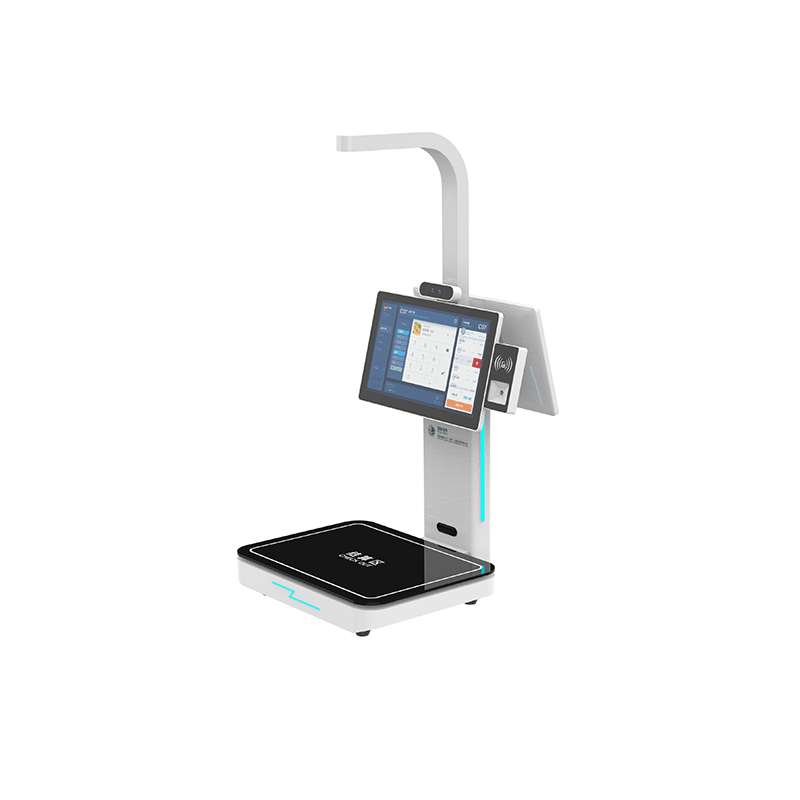
How to Choose the Right Self Checkout Weighing Machine
Before purchasing an automatic weighing checkout machine for supermarkets, you should evaluate several factors to ensure the equipment matches your business requirements.
Siga estas etapas:
- Identify your product categories. Determine whether you mainly sell fresh produce, packaged goods, bulk products, or a combination of items. This helps establish your weighing and identification requirements.
- Check weighing accuracy. Ask the manufacturer about sensor specifications, weighing capacity, measurement increments, and calibration procedures.
- Evaluate hardware configuration. Review the operating system, BATER, armazenar, display resolution, power consumption, and connectivity options.
- Confirm software compatibility. Check whether the machine can work with your existing POS, product database, payment applications, and inventory management platform.
- Review customization options. If you operate multiple stores or need specific functions, discuss enclosure design, screen configuration, software adaptation, and other ODM/OEM requirements.
- Verify manufacturing and after-sales support. Request product samples, inspection procedures, warranty terms, and delivery schedules before placing a bulk order.
Following this process helps you compare suppliers based on actual operational requirements rather than hardware specifications alone.
Why Work with XTD for OEM/ODM Self Checkout Kiosks?
Shenzhen Xingtongda Tecnologia da Informação Co., Ltda. is a Shenzhen-based manufacturer specializing in self-service terminals and intelligent equipment solutions.
A empresa fornece design de produto, Fabricação ODM/OEM, and technical support for customers across different industries.
Its manufacturing capabilities include:
- Sheet metal fabrication: A professional workshop equipped with Bystronic 4000W and 3000W laser cutting equipment, Máquinas de dobra CNC, máquinas de rebitagem, e equipamentos de soldagem.
- Product development: An R&D department responsible for developing new products and adapting equipment to customer requirements.
- Production and testing: Dedicated production, testando, and aging lines to support manufacturing quality control.
- Inspeção de qualidade: Pre-production prototype development and final product inspection before shipment.
- Serviço pós-venda: Technical assistance and after-sales support, with a standard one-year product warranty after shipment.
Beyond weighing checkout machines, XTD also manufactures self-ordering kiosks, self-payment machines, terminais de pagamento, ATM equipment, and other self-service products.
For buyers seeking a customized supermarket self-service checkout solution, working directly with an ODM/OEM manufacturer can simplify hardware development and product customization.
Perguntas frequentes
1. What is a supermarket self checkout kiosk with a weighing scale?
It is a self-service retail terminal that combines weighing and checkout functions. Customers can place eligible products on the weighing platform, allowing the system to measure their weight and support price calculation and settlement.
2. Can a weighing checkout machine integrate with an existing POS system?
Integration depends on the machine’s software, communication interfaces, and POS platform. Before ordering, you should provide your system requirements to the manufacturer and confirm compatibility.
3. Does XTD provide customized self checkout kiosk manufacturing?
Sim. Shenzhen Xingtongda Tecnologia da Informação Co., Ltda. provides ODM/OEM services. Standard products generally have a lead time of 7–15 days, customized prototypes take approximately 25–35 days, and ODM/OEM bulk orders usually take around 30 dias. Actual schedules depend on product specifications and order requirements.
Conclusão
UM supermarket self checkout kiosk with integrated weighing and settlement functions offers retailers a practical way to simplify transactions involving products sold by weight. By combining weighing sensors, Android-based hardware, and a user-friendly interface, this equipment can reduce repetitive checkout tasks and support more efficient retail operations. Before purchasing, you should evaluate weighing specifications, POS compatibility, customization capabilities, and after-sales support. Shenzhen Xingtongda Tecnologia da Informação Co., Ltda. provides self-service terminal manufacturing and ODM/OEM services to help businesses develop retail equipment that matches their operational needs.
Looking for a Customized Supermarket Self Checkout Kiosk?
Contato Shenzhen Xingtongda Tecnologia da Informação Co., Ltda. to discuss your weighing checkout requirements, configuração de hardware, and OEM/ODM customization needs. Our team can help you evaluate a suitable self-service terminal solution for your retail business.
